
As Sonoma State prepares for its Spring 2026 Budget and Planning Forum on April 2, 2026, the campus continues to adjust to this post-deficit transitional period. With new leadership, fiscal challenges, and ongoing uncertainty within majors and departments, many eyes are on how this university plans and budgets.
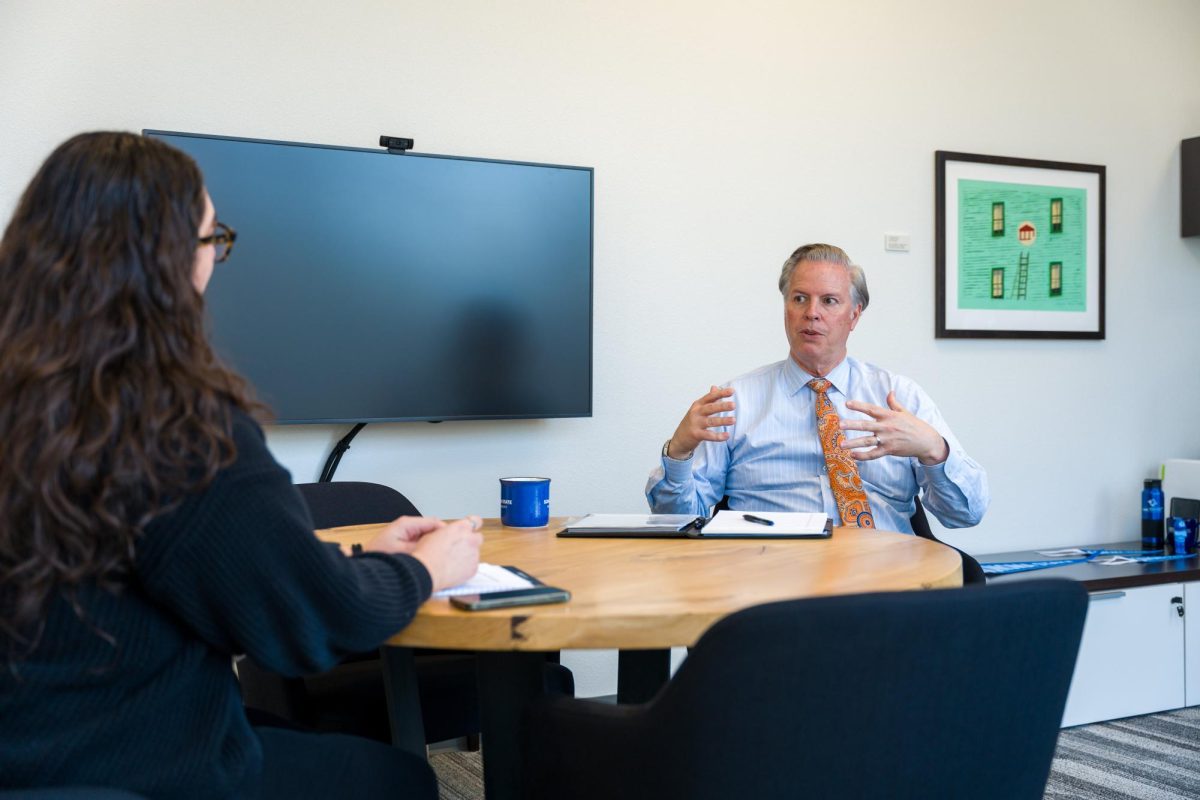
In a one-on-one interview with Sonoma State President Michael Spagna, he highlighted the university’s challenges and its path forward. Like many institutions, Sonoma State is navigating the decline of enrollment accelerated by the pandemic and the university’s relationship with state funding and taxpayers.
“We are all funded based on taxpayers’ dollars. Institutions can’t thrive in a fiscal environment without the support of others,” said Spagna.
In his January budget proposal, CA Gov. Gavin Newsom recommended funding that exceeded the CSU system’s request, which Spagna said he has never seen in his career.
While this decision softens potential budget cuts and shows an increased investment in higher education, Sonoma State’s financial stability depends heavily on enrollment.
“Priority No. 1 is making sure we can recruit new students, making sure that they understand this is a great environment, and that will write the fiscal chapter of what’s happening,” said Spagna.
Focusing on strong outreach to retain and recruit more students, Spagna will visit high schools across CA to help rebuild that pipeline. There will also be outreach to students who paused their education and those pursuing multiple credentials.
Sonoma State will also collaborate with the broader CSU system to share best practices and address system-wide issues such as enrollment and spending. This opens the door to invest in innovative ideas like cross-campus access for students and bridge programs that will allow students to earn multiple credentials without having to “start all over again”.
Spagna quoted a faculty member at an Academic Senate meeting: “We keep applying what our experience as a student was to what their experience as a student is. It’s completely different. In our day, we were preparing for a 30-year career. Now, modern students go through a variety of careers, and we have to support them in those places.”
This collaborative approach is reflected in a new financial planning structure that includes “Fiscal Action Plan” meetings with the chancellor and trustees.
“This was initiated by the chancellor and the trustees, which I love…We regularly meet with the leaders at the chancellor’s office to say, this is what we’re doing in enrollment,” said Spagna. “This is how we’re spending money… And it’s good to have that oversight and that dynamic so that we’re not making decisions independent of what the system is doing and vice versa.”
Sonoma State is positioning itself as a part of a larger interconnected system. Spagna outlines how many communities in the North Bay care about the university but have lacked confidence that their investment would last. The university now aims to rebuild that trust and create a connection that will last well beyond Spagna.
“I think that that’s been the hard thing, and what I’m hoping to navigate in this first year is people seeing themselves in the uplift for the university,” said Spagna.
During this transitional period, the university emphasizes collaboration and strategic planning. The Spring 2026 Budget and Planning Forum on April 2, 2026, offers the campus and community a chance to stay informed as the university works to rebuild SSU and its financial stability.