





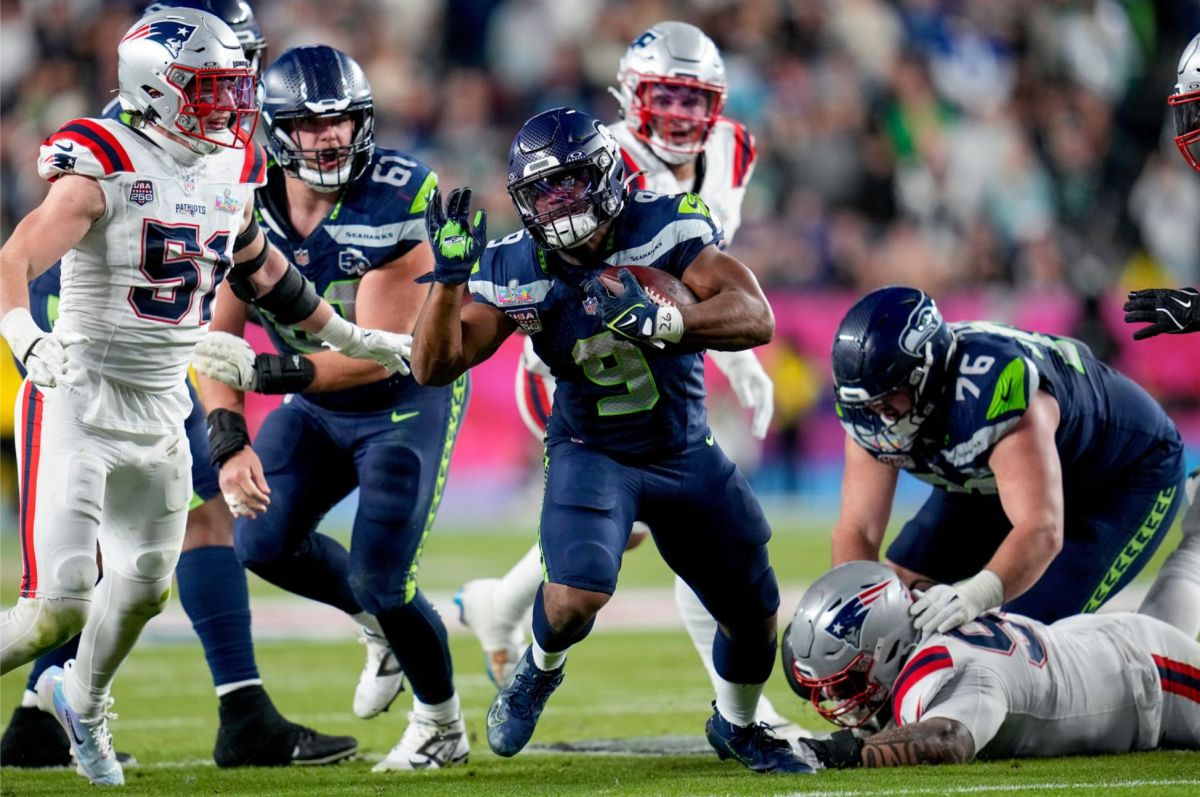
Eleven years after a heartbreaking goal-line interception defined their last meeting, the Seattle Seahawks finally found their redemption in a dominant 29-13 victory over the New England Patriots in Super Bowl LX at Levi’s Stadium in Santa Clara, California, claiming the franchise’s second Lombardi Trophy on Feb. 8.
Seattle didn’t just win the Super Bowl LX; it exercised a decade’s worth of demons behind a standout performance from Kenneth Walker III, who earned MVP honors after rushing for 135 on 27 carries. Walker became the first running back to win the award since Terrell Davis in 1998 with the Denver Broncos.
Super Bowl LX was also defined by Seattle’s “Dark Side” defense. Led by head coach Mike Macdonald, the unit tormented Patriots quarterback Drake Maye from the opening kickoff. The Seahawks recorded six sacks, including two apiece from Derick Hall and Byron Murphy II, effectively neutralizing a New England offense that had been clinical all season.
The game remained a defensive stalemate for three quarters. Seattle’s offense struggled to find the end zone early, but kicker Jason Myers etched his name into the record books by converting a Super Bowl-record five field goals. His leg accounted for all of Seattle’s points until a pivotal fourth-quarter surge.
The tide turned when a strip-sack by Hall gave Seattle prime field position. Quarterback Sam Darnold, completing a remarkable career resurgence, connected with tight end AJ Barner for a 16-yard touchdown, the game’s first. Shortly after, linebacker Uchenna Nwosu intercepted Maye and returned it 45 yards for a score, slamming the door on any New England comeback.
While some fans hoped for a more entertaining than Seattle’s dominating defense, the victory served as a full-circle moment for the Seahawks, erasing the “what-ifs” of the past and cementing a new era of dominance in the Pacific Northwest, as well as a new king of the NFC West and the NFC.

