




Sonoma State University’s history master’s program has reopened and is accepting applicants for fall 2026.
Originally announced as discontinued during the cuts of spring 2025, the program is now being revived as the university’s first combined bachelor’s to master’s program.
“Even if somebody joins the program pretty late… there’s still an advantage to being in the blended program,” said Michelle Jolly, history professor and graduate coordinator at Sonoma State.
The new combined program will allow students to transition from the bachelor’s to the master’s track without reapplying. Students who meet the GPA and credit requirements will receive guaranteed admission to the master’s program, eliminating application fees. Students can double-count up to 12 units toward their B.A. and M.A., enabling students to graduate with a master’s degree a semester sooner.
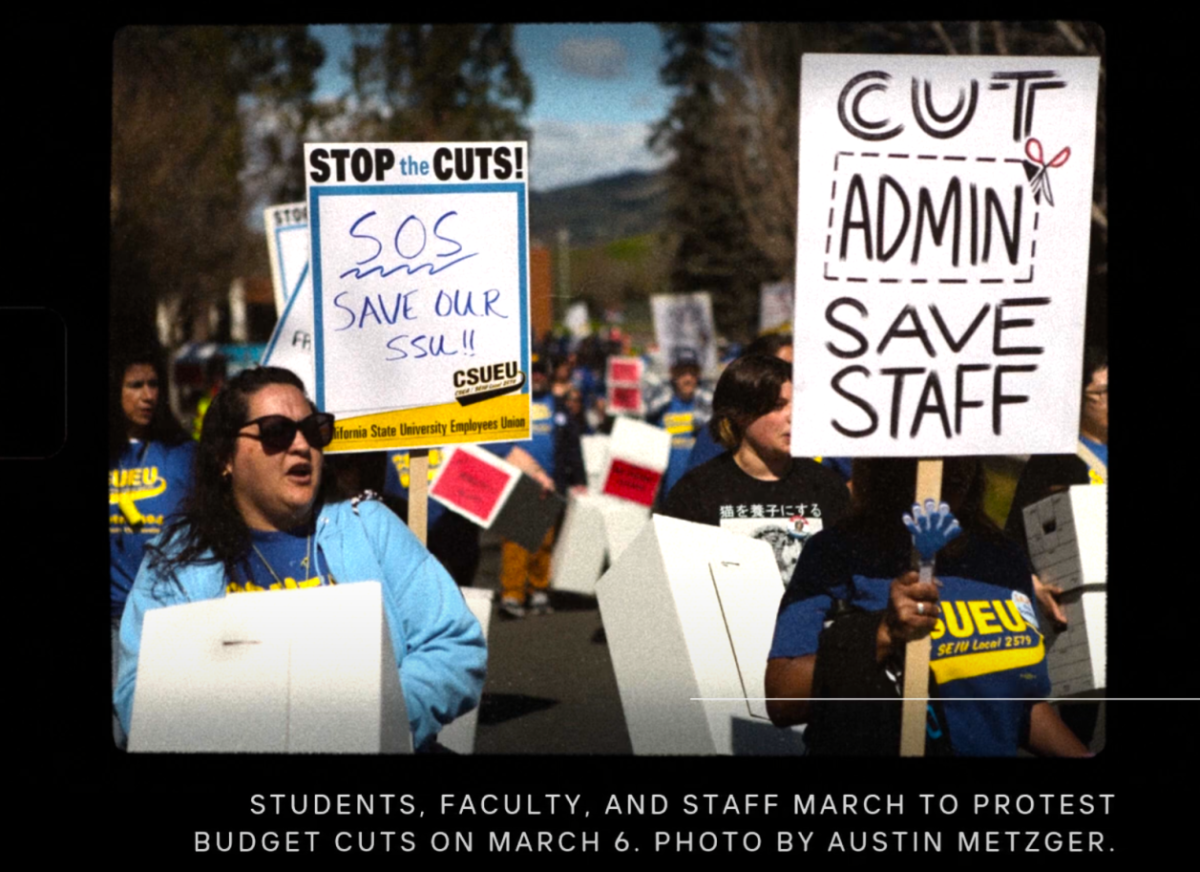
As part of broader campus cuts in spring 2025, the history department lost all of its lecturers and longtime faculty member Kathleen Noonan, who helped spearhead the Faculty Early Retirement Program (FERP), along with the discontinuation of the M.A. program. Faculty argued the cuts relied on outdated enrollment data from COVID-19 and didn’t reflect their rise in numbers and the changes they were already making to enhance the program. One of those changes is this combined B.A./M.A. track.
“We ended up persuading the [Provost’s Office] that… we were on pace not only to be healthy, but to grow the program,” said Jolly.
Through negotiations, the history department was able to get its M.A. program suspended rather than eliminated. This gave them an academic year to propose a plan that proved the program’s viability. In November, the history faculty submitted a revised proposal that included changes such as a combined B.A./M.A. track. The proposal was approved, allowing the program to be reinstated.
The combined program is expected to increase enrollment, making the transition from bachelor’s to master’s degree easier and more affordable. Jolly also described a prospective expansion that would allow students in other majors to enter the history M.A. track, such as psychology B.A. students. The combined program not only creates more accessibility for history students but also broadens the pool of eligible applicants.
“I am in favor of it… It really does make sense to me as an educator, that a student who is really motivated, who is finishing their B.A., can do a bit of extra work to get that M.A. status,” said Amy Kittelstrom, history professor at Sonoma State.
Although this is the first combined B.A./M.A. program at Sonoma State. Many other CSU campuses are using this method. These blended degree tracks create more opportunities for students, which in turn will raise the applicant numbers. Jolly noted that other programs at Sonoma State are also considering a similar approach, such as the English Department. “I think the administration is excited to have somebody leading the way, because we can work out all these kinks and it’s going to make it easier for others to see what a program like this would look like,” said Jolly.
As the history department continues to develop its combined B.A./M.A. program, its focus remains the same: educating students and preparing them with transferable skills for a variety of careers. This combined track also exposes students to the possibility of pursuing an M.A. much earlier, making it more feasible.
“History isn’t just a thing you study if you want to become a teacher…it’s actually the basis for anything that involves critical thinking,” said Kittelstrom. “It empowers graduates, in politics, in business, in their communities, in all sorts of ways that aren’t obviously about history.
