



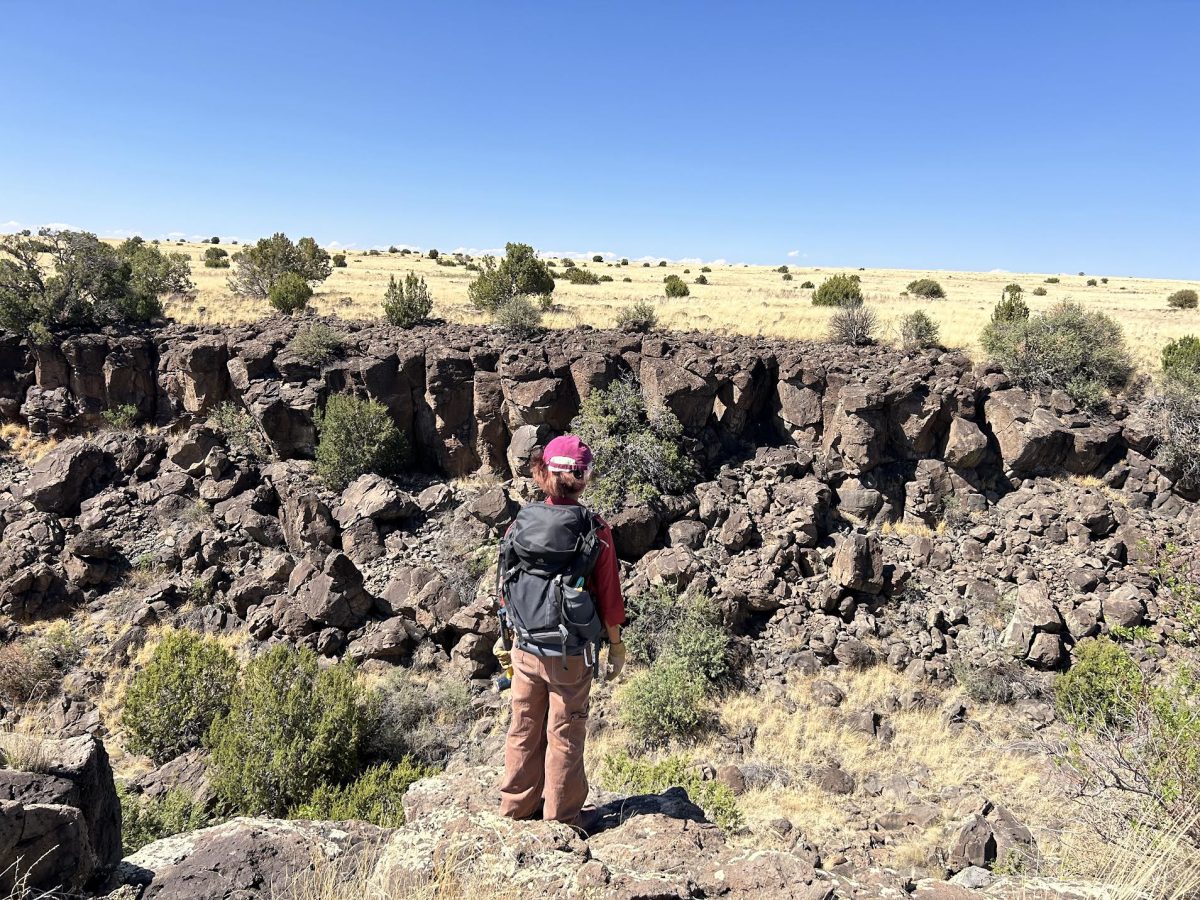
As Sonoma State’s geology department faces ongoing restructuring, a nearly 100k federal research grant offers a silver lining, providing students the opportunity to conduct volcanic field research.
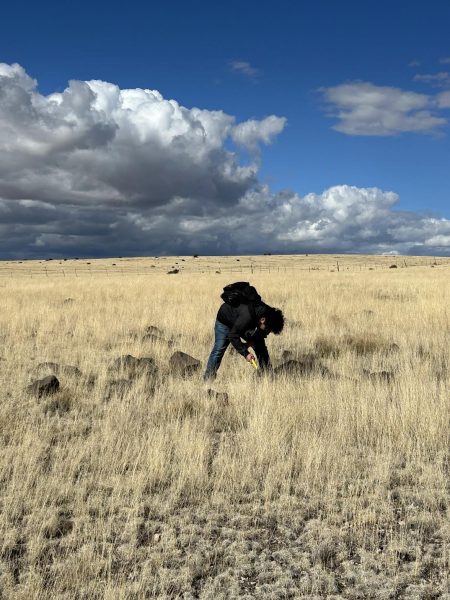
“They are taking what they learned in the classroom and applying it to make something that will be published as a map, and will be added to the work that has been done in the field,” said Marissa Mnich, Sonoma State Geology Assistant Professor.
A recipient of the grant herself during undergrad, Mnich spearheaded the grant process. Providing funding for a volcanic research project, mapping volcanoes from the Coyote Hills volcanic field for the second time in a row.
The grant, awarded by the United States Geological Survey (USGS), is part of an EDMAP Program, training the next generation of geologic mappers by funding projects that provide geology students with in-field experience. These grants are a cooperative agreement between USGS and the universities.
“So every dollar that I request from the USGS has to be matched through the university,” said Mnich.
USGS contributed around 50k to the project. Due to department downsizing, Mnich is no longer getting compensated for her time leading the research project, but what her salary would have been still counts as part of the matched funds for the grant. SSU also uses the estimated value of the in-house equipment and volunteer collaborators from the University of Massachusetts to match the USGS grant.
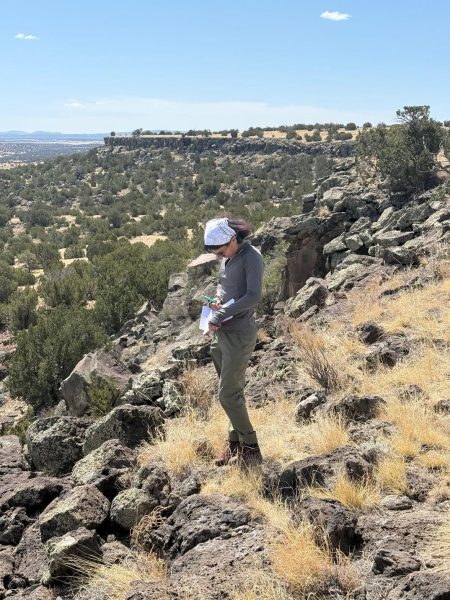
Geared towards students, the grant doesn’t provide funding for faculty or collaborators. Over the summer, Mnich effectively volunteered her time to spend a month leading this field work.
“I just really love giving students a chance to make their own map, we teach them how to map, but this is their map. It’s such a valuable part of their education here,” said Mnich.
The research projects allow students to get in-field experience and a chance to publish work. It also expands their network, collaborating with professionals from the University of Massachusetts and USGS scientists.
In an interview with Sonoma State, Atzi Olivarez, SSU Geology major and research assistant for the volcanic research project, said, “Being a part of a smaller major, the connections I have fostered with my professors and lecturers are quite personal and precious to me…Professor Mnich has uplifted and motivated me to take charge of my education and the development of my professional career.”
After using the first grant to map one of the two shield volcanoes in the Coyote Hills, Arizona, Mnich applied for the funding again to continue the project. Mapping the last unmapped area in the field, which is about 3,000 square kilometers.
Although the proposal was submitted more than a year ago, originally intended to support fieldwork last summer, government budgeting issues and the shutdown caused the grant to be awarded this January.

(Isabella Marquez)
The research team spent last summer collecting field samples from a volcano on the eastern side of the volcanic field. Collecting a total of 62 samples, this funding will be used to analyze the volcanic material and finish mapping.
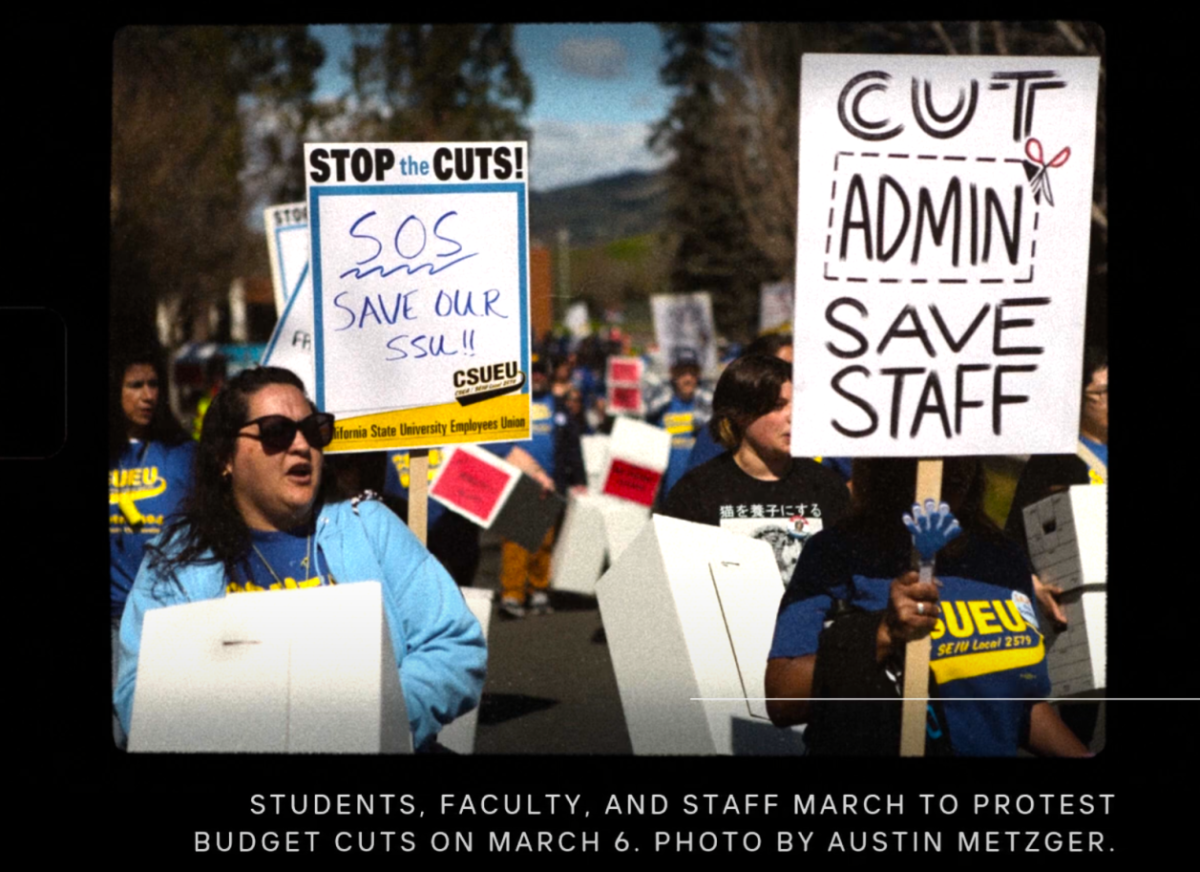
In January of 2025, Sonoma State announced major budget cuts, including the elimination of the geology department. Newly appointed president Dr. Spagna later announced in February that the program would be revived and integrated into the environmental science curriculum.
However, the department is still facing significant downsizing. This academic year is serving as a “teach-out year”, allowing current geology majors to finish their degrees.
While the department was able to retain three tenured faculty members this year, the future of the geology department is still unclear.
Next year, one faculty member will remain part of the merged department, the other has moved to administrative work within the department, and Mnich is set to be laid off on May 29.
Ideally, Mnich wanted to organize the research project for this summer, but now she only has a few months to utilize the grant as her departure date approaches and the department continues to scale back.
These types of research grants play a critical role in creating meaningful educational opportunities for students. Mnich’s project offers students in-field experience and collaboration with professional geologists.
As the geology program faces uncertainty, Mnich’s work highlights the lasting impact of mentorship and the important role she’s played in the program’s field-based learning.
