


Project Rebound is helping formerly incarcerated students at Sonoma State University navigate the challenges of reentry and pursue higher education.
The program is a bridge for students re-entering society and pursuing a higher education, providing academic mentorship, financial support, community, and a sense of belonging.
Launched at SSU in Fall 2025, Project Rebound traces its roots to 1967, when San Francisco State University professor Dr. John Irwin founded the program to support formerly incarcerated students.
As someone who had been incarcerated, Irwin understood the barriers to obtaining a college education and the value it could provide.
“Stigma is real,” said Dr. Khou Yang-Vigil, executive director of CAASE at SSU. “My thing is humanizing person to person. I see you and want to support you. With me, you will have a coach for life, even after you graduate.”
Project Rebound’s direct line of contact to campus offices allows them to advocate on behalf of students facing a range of issues from enrollment to financial aid.
“Flexibility is one of our biggest strengths,” said Intern Program Director Donaciano Torres. “We can work directly with admissions, vouch for students, and ask for a special exception.”
The support and advocacy were vital for Student Ambassador Michael DaSilva, who entered the program after spending 21 years incarcerated.
“I started taking classes,” said DaSilva. “It became a coping tool. I threw myself into studying and helping others.”
DaSilva, a third-year transfer student majoring in psychology, earned nine associate’s degrees while incarcerated and completed coursework for drug and alcohol counseling.
DaSilva is also a McNair Scholar, a program that supports first-generation and low-income students pursuing doctoral degrees. He plans to earn a Ph.D. in psychology.
“I’ve been out for eight months,” said DaSilva. “My life was complicated, and reentry was much harder than I expected.”
DaSilva said that 10 years in solitary confinement became “the impetus for change.”
In two weeks, DaSilva will be SSU’s representative to the Human Rights Consortium at Oxford University.
“Education changed my identity and worldview,” said DaSilva. “If I had to do that alone, navigating college paperwork [or] applications, I wouldn’t have made it in my first semester.”
Support extends beyond academics.
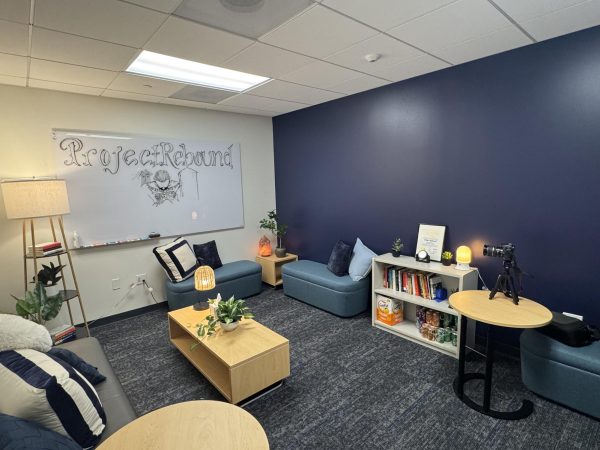
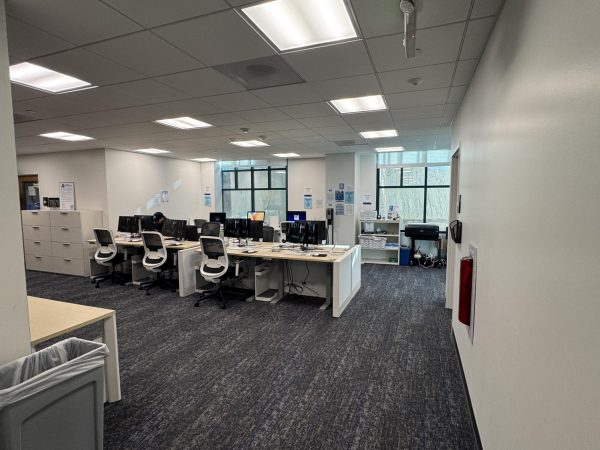
The program has a dedicated space in the Schulz Library. Participants are provided with snacks and a place to study, connect, and build community with others who share their lived experiences. Students in the program will also receive a $1,000 grant, a parking pass, and a swag bag.
Eighteen students have entered the program, far exceeding their goal of 10.
Project Rebound leaders strive for continued growth on campus. There is ongoing partnership work with the Department of Rehabilitation and other outside organizations.
They are developing emergency support and collaborating with both on and off-campus partners to secure housing for students experiencing instability.
“I don’t think I would have been able to stay in school without housing support,” said DaSilva.
Despite the program’s early success, awareness is essential to reach students in need.
Data from the California Department of Corrections and Rehabilitation shows that 39% of formerly incarcerated people reoffend within three years.
Torres believes Project Rebound can reduce this number.
“We want to help students not become a statistic of recidivism, but a graduation statistic.”


