

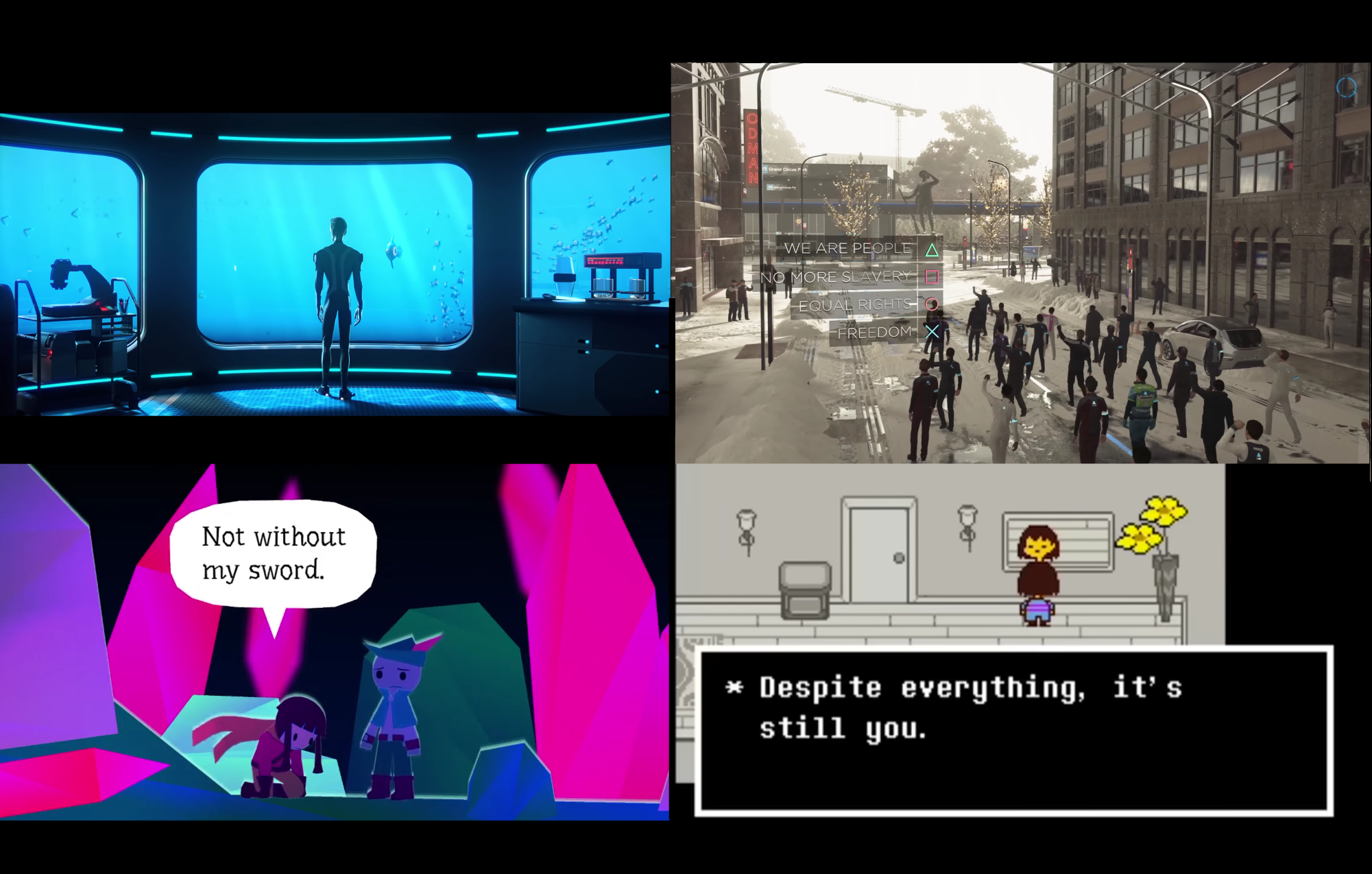
Video games as a genre have always been centered around violence.
The first video game protagonist to pick up a sword was in the Legend of Zelda (1986), followed by the iconic quote: “It’s dangerous to go alone – take this.” The first gun was even earlier, in 1975’s Taito’s Western Gun.
When you think of video game genres – nearly all of them are based on games with violent ideals. High-adrenaline shooters were pioneered by Doom, the Legend of Zelda inspired sword wielding role playing games, Asteroids and Galaga brought us spaceships with lasers, and even more innocent genres like platformers involved stomping on goombas.
Wanting to appeal to a similar audience as action movies, video games in the 80’s began marketing to boys, using damsels-in-distress and masculine heroes who use violence to solve their problems. And while it wasn’t always intentional, this marketing tactic established an industry built on gendered stereotypes and violence.
Of the 30 games nominated for the British Game awards since 1998, only seven lacked significant elements of violence. For “The Game Awards” since 2014, only two of the ten games awarded “game of the year” have been nonviolent in nature.
That doesn’t mean there haven’t been successful examples of games that don’t rely on violence. Minecraft (2011) and Stardew Valley (2016) have become two of the most successful games this decade for their building and farming applications respectively, and appeal to much broader crowds, including challenging the gender divide in gaming and bringing in more female players. But both games still feature significant elements of violence, with “monsters” you can defeat for materials, which normalizes the act of violence.
And now in the modern age, we see this pattern repeated over and over again, with corporations marketing “epic action-packed shooters” nonstop… and what are the consequences of that? This is especially pertinent today, as gun violence, especially at schools has been on the rise – and the recent shooting of Charlie Kirk having found a bullet with the code for an airstrike for the game Helldivers 2, has resparked conversations about the effects of violent games on politics and youth.
Do video games cause violence? The answer: Sort of.
In 1993, following the increasing prevalence of violence in video games like Doom and Mortal Kombat, the senate began having hearings with concerned parents which resulted in the Video Game Rating Act of 1994, which created a series of ratings like PG-13, R, ect, similar to the movie industry.
But one look at today and you can see that doesn’t mean kids are being exposed to any less violence – with games like Fortnite and League of Legends being endlessly marketed to young men. These PvP (player versus player) styles of games have become incredibly popular among companies due to how little effort it takes to regulate a game where most of the content comes from fighting other players – meaning they can focus most of development on microtransactions that make the corporation a quick buck. League of Legends in particular, has only really had one game mode for its entire lifespan. Yet it still manages to trap young men in – competition is addictive – at the cost of their own mental health.
A study by Technology, Mind, and Behavior, an organization devoted to studying the effects of technology on psychology, found that frequent exposure to violent video games led to higher levels of aggression and stress. Though it mentioned that games being faster-paced and competitive was more of a factor than simple exposure to violence.
A study by JCFS mentioned similar results, having students play 30-minutes of a randomly selected violent or non-violent game, and told them they would be competing against another student, and could “punish” their rival by playing a harsh noise at any volume they wanted. While there was secretly no other participant in the other booth, students who played violent games were more likely to turn the dial up higher than ones playing a peaceful game. Interestingly, the study actually found that it wasn’t specifically the violent nature of the game that was causing the higher levels of aggression, but rather the stress of more intense gameplay, combined with the element of competition, that led to a higher willingness to hurt others.
Others argue the opposite – that playing violent games can be a way of letting people with aggressive tendencies “blow off steam” in a function similar to rage rooms, places people can go to rent a room just to break stuff. In Jamie Madigan’s “Getting Gamers: the Psychology of Video Games and Their Impact on the People who Play Them”, Madigan argues for this theory a bit, and mentions that in small amounts, exposure to violence can actually have positive effects – however, he does mention he is unsure about the effects of long-term exposure to violence and mentions that “we simply don’t know” what the effects of it will be.
A more important question:
While I don’t know if I believe in the idea of catharsis theory, especially with how violent PvP games are known to be addictive and can turn “just blowing off steam” into a way of life, “Getting Gamers” does actually bring up a compelling point that video can have positive effects such as increased problem-solving skills. Madigan argues that games are unlike any other form of media, in that experiencing them can train you on real world skills similar to a sport. “You have to hold a representation of the 3D environment in your head … distinguish between a pile of debris and another player… the same goes for audio cues like gunfire, footsteps,” says Madigan. “Reaserch has found that attention is a mental tool generally wielded more effectively by action gamers.”
And that’s not to mention the power of perspective that video games can capture. Craig Kielburger, in their opinion piece “Can video games build empathy?” Keilburger argues that getting to see acts of violence through the eyes of a victim can help you connect with others and empathize with global struggles. “Video games aren’t the enemy. It’s all about how you use them.” Keilburger says, “Even more than traditional media, they let you experience the world through the eyes of another. And that’s where empathy lives.”
Adam Millard – The youtuber known as “the Architect of Games” argues in his video “Why We’re Wrong About Violence In Games”, that a game simply having violence does not make it problematic. For a story to be interesting, there has to be conflict, Millard argues, and it is not the existence of violence as a conflict, but it is the solution to conflict being combative, or “victory over others at all costs”, that has been told time and time again.
“Whether you prefer violent or nonviolent games doesn’t matter,” argues Millard. “However, we need to be aware of what an undue focus on a particular kind of game does to our perception of the medium.”
There is a strong argument to be made that violent video games can glorify violence and desensitize you – and I’d agree, but I don’t think violence isn’t the root issue – it’s the message.
As an example of a series that uses violence, but with a positive message, is the Halo series. In the video “The Game that Taught You to be a Good Person”, youtuber CrontexBeats explores that despite the Halo series centering around war, the game shows the effects that genocide can have on a people, how to question blind faith to a system built on murder, and the importance of forgiveness and drive for a better feature in the face of overwhelming odds.
“Give a child a copy of Rust, and he would grow up to succeed by taking from others. Give him a battle royale, and he would learn that all that matters is victory over everyone else,” says CrontexBeats. “But give him Halo, and he would learn hope.”
And games like Helldivers 2 – again, one that was referenced in the shooting of Charlie Kirk, might seem to glorify violence on the surface, but look deeper and you’ll find a surprisingly nuanced critique of militaristic facism and the ways that media fetishizes gun violence. The bullet in mention being engraved with “hey fascist – catch” inherently misses the connection between violence and facism the game argues for. This darkly ironic message, I would argue, shows the dangers of a lack of media literacy, with tragic real-world consequences.
A game simply having violence in it does not make it cause violence – but it is how a game uses violence that matters. And there are plenty of beautiful games that don’t rely on violence, but go further, to critique the reliance on it in video game tropes, and use it to encourage peace and empathy.
Let’s look at some examples:
Wandersong – and what it means to be a hero:
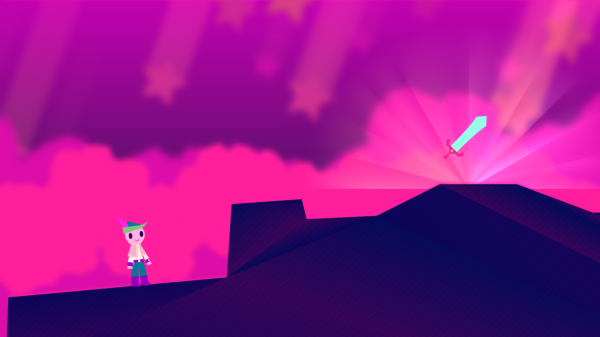
Wandersong (2018) by Wishes Unlimited is one of those games that is much deeper than it seems. Looking at the trailers and store page, the game describes itself as simply a “musical platforming adventure with an emotional story”. But underneath the game’s cutesy appearance lies a dark and compelling story about the consequences of violence and finding hope in dark times.
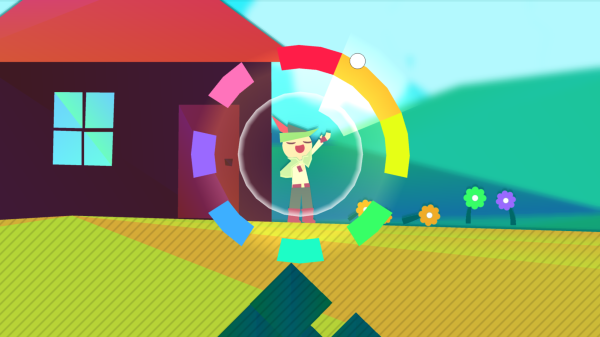
At the beginning of the game, the main character, simply referred to as “The Bard” has a dream in which they are told that the world is ending, and the goddess Eya, needs a hero to rescue it. The bard picks up a sword and faces a dark monster, but finds themselves unable to use it. So they resort to what comes naturally instead; singing.
Their singing doesn’t scare the monster away, but a messenger for the goddess Eya, known as Eyala, visits the bard to tell them “OMG you are just so cute!” before explaining what happened.
“This was supposed to test if you’re a hero. Which you’re not.”
The bard responds “Just a bard!”
Eyala explains to the bard that even though they aren’t the hero, there is something they can do. There are seven overseers that guard over the earth,
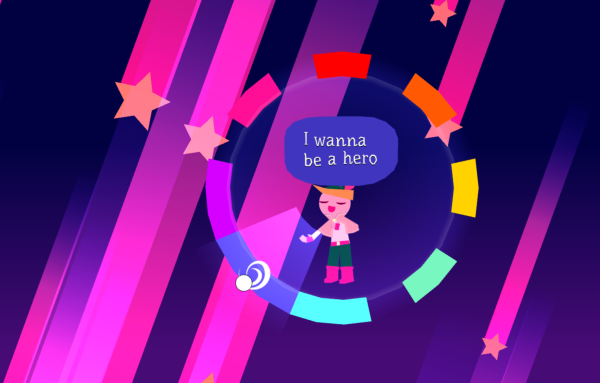
and each one knows a piece of the Earthsong – a legendary melody that if ever sung, could convince the goddess Eyala that the world still has hope – and she could be motivated to save it. Thus, upon waking up, the bard’s journey begins – to visit all seven overseers and learn the earthsong.
On their journey, the bard meets two foils – characters that are used to compare and contrast with a game’s protagonist to teach us something about them. The first character to do this is their friend Miriam, a grumpy witch living with her grandma who doesn’t really get the bard’s singing. She wants to save the world too – but takes a much more direct approach, not being afraid to use violence to get her way, but the bard manages to show her that there are other ways to get what you want.
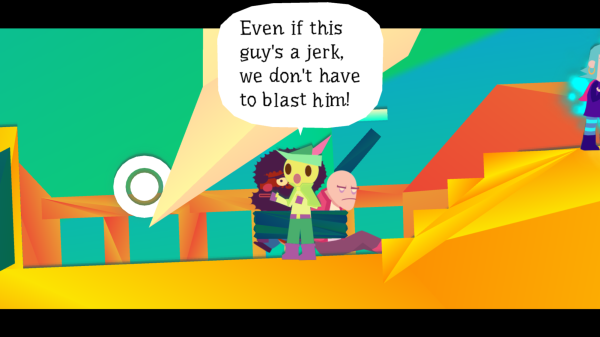
When the bard runs off to inevitably get lost in sidequests, from joining a band to befriending a pair of trolls, Miriam gets upset at their distractedness. But, those sidequests inevitably end up teaching the bard the way into the spirit world, showing that helping others can lead them to repay the favor, sometimes even by accident.
But a really interesting twist happens about halfway through the story. Now would be a good moment for me to warn you – I will probably get into spoiler territory for each of the games I discuss. If you are interested in one from the first few paragraphs, go check it out, whether by playing it or watching a video! While I won’t spoil the endings of any of these games, some of these moments might be more impactful if you see them on your own the first time.
That being said – here’s wandersong’s beautiful twist: You might not be the hero, but someone else is. That second foil we meet is Audrey Redheart, and she’s the hero.
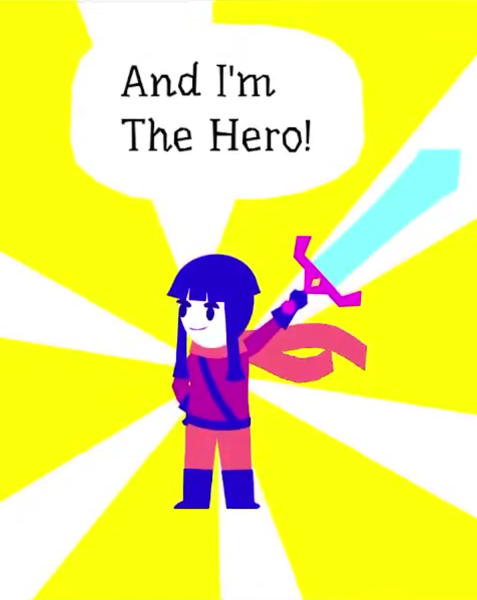
Accompanied by over-the-top rock music and the insatiable ego that comes with main-character syndrome, Audrey explains that she is on a special mission sent by Eya to defeat all seven overseers and rid the world of a “sickness” they have come down with in their old age.
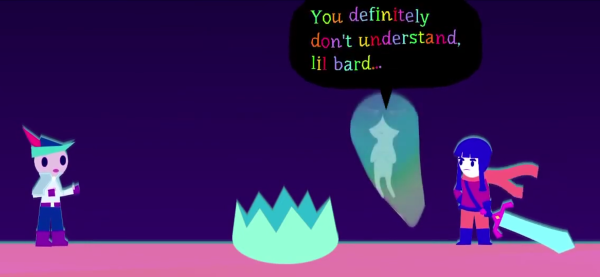
Then, Eyala shows up, and reveals she’s been lying to the bard all this time. “Soo… the Earthsong isn’t going to work.” Eya says “It’s never worked. I didn’t want to tell you no, I still don’t. But I have to be realistic.”
She was lying to the bard this whole time. The gods of this world don’t care if they save it or let it die. “I’m an angel of Eya and a guide to the hero. My job is to usher in the end, and pave the way for a new beginning.”
“So I was supposed to give up?” Asks the bard. “And just let the world end?”
This was news to Audrey, too. She wasn’t aware she was being used to bring out the ending of the world. Later, Eya tells her “Sorry you had to find out that way… I’m not really supposed to tell the hero that.” She was lying to the bard just as much as the hero.
But in that moment, Audrey doesn’t question Eyala, or care much that the world is ending. And she makes a choice – one of blind faith to a role assigned to her. “Sheesh, quit being such a baby.” Snaps Audrey. “You really thought you could sing some song and solve everything? How about you leave it to the real heroes.”
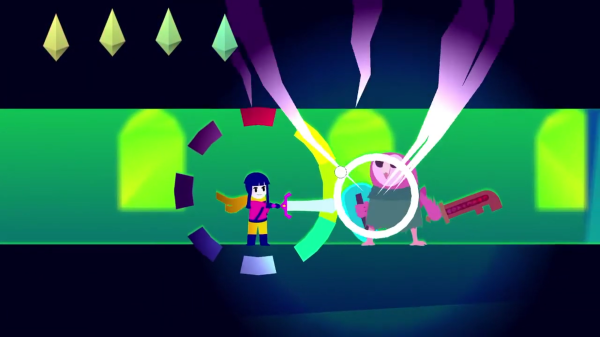
In the next scene, you actually get to play as Audrey. You have to use your sword and kill stuff all while Audrey is being pampered and cheered on both in, by both in-game and meta factors. See – here’s another twist. The game’s 75 achievements aren’t the bard’s – they’re hers. In this 10-minute scene, you are thrown a constant onslaught of unlocks, “jump 5 times, lighting strike x100, kill 15 stompies!” all while Eyala cheers you on “Yeahh, you da bomb!”. When you watch Audrey kill an overseer, you’re hit with an achievement with some sort of clever pun like “Out of Order – kill queen order” or “Heartbreaker – Kill the king of hearts” with a bad joke disguising the fact that you just killed someone.
It feels so video-gamey in a way that is the antithesis of everything wandersong stands for, and the complete difference in gameplay and atmosphere reflects the different perspectives that both characters experience. We learn later in the game that the spirit worlds where overseers live change to reflect the perspectives of those that visit it. It makes so much sense then, that for the bard they have some simple puzzles and platforming, but for Audrey, the spirit worlds are hostile gauntlets of enemies and obstacles.
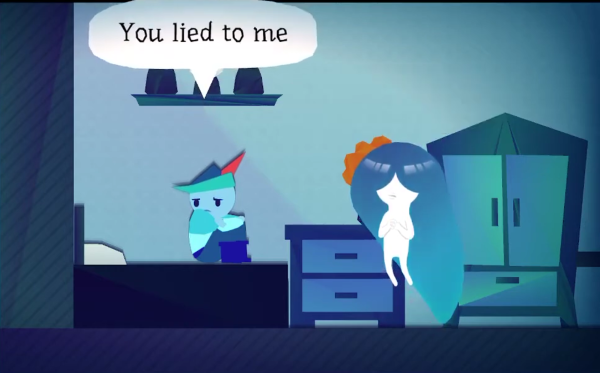
Later in the game, we get to learn a bit more about Audrey when she loses her sword, and the bard and her are forced to work together to get out of a cave and climb a mountain. They connect over both feeling manipulated by Eyala, and coming from a similar past, just wanting to be recognized for something. The difference is, the bard wants to be recognized for their own actions, while Audrey feels like her role as the hero is the only thing people care about her for. Audrey is trapped in a role, while the bard writes their own story.
The bard is a pacifist. They don’t fight, even when others tell them they should, because they prefer to use their voice, and song. They offer unconditional help to anyone they come across – from people, to trolls to even the tiniest of bugs. And even the tiniest of kindness can pay you back, with the bugs showing up to clear the way out of the cave for them.
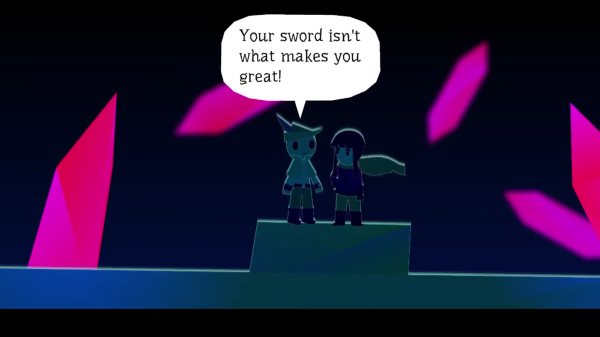
“So you’re saying… I have to rely on bugs to get out of here.” Audrey asks in shock.
“Yes Audrey, bugs move rocks!” The bard says .“Everyone steps on bugs without thinking. Can you imagine how that feels? It’s sad… when nobody even cares about you. So I don’t step on the bugs, Audrey!”
“And just for that, they’re your friends? How did you know they would help you?”
“I didn’t know they would help me. That’s not why I care about them, Audrey. I care about them because they’re living things. And even if they never did anything to help me at all, they would still be worth caring about.”
It’s moments like these that show the true character of the bard – that even in the face of the end of the world – they don’t need a sword to be a hero, because their voice is enough.
“You’re so simple.” Audrey tells the bard at one point. This line really stuck with me – because it felt deeper than just the game. In a world where dark, grizzly stories get all the attention, why is a cuter game like Wandersong treated as any less of a story? Why do we need anti-heroes, gray morals, tragedy, violence, to be interested in a work of art? Being genuinely kind in the face of darkness is one of the most difficult stories to tell.
“You’re always so sure of what you want, and you’re always so happy. How do you do it?” Miriam asks the bard later into the story.
“You mean… be happy?” The bard asks.
“Yeah. How do you do it? I want to be happy.”
“I don’t know. Maybe… It’s not really that easy. I have to try hard all the time. Lots of stuff makes me feel sad.” The bard says. “I just… stopped thinking about it.”
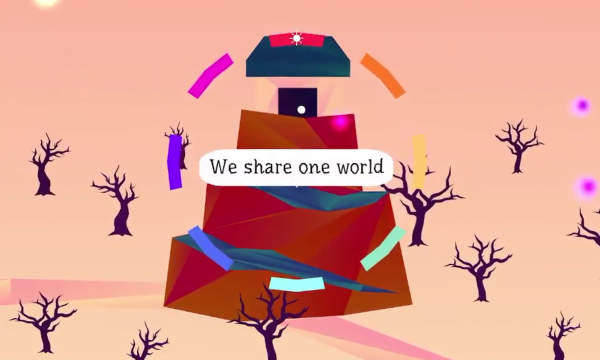
Throughout its runtime, wandersong manages to not only deliver on the whimsy it promised on the surface, but tells a really deep and dark story about the power of kindness and unconditional love in the face of dark times. We watch the bard move from inspiring a small town, to bringing down a corrupt factory, to ending a war between kingdoms, to saving the world, but it is the smaller, more personal struggles that show who the bard really is.
Being a hero isn’t about defeating your opponents – it’s about taking their bullshit and still being kind even despite it. It’s showing love, in a world that wants you to show hate. And that is something this next game explores very well.
Detroit Become Human – and the power of peaceful revolution.
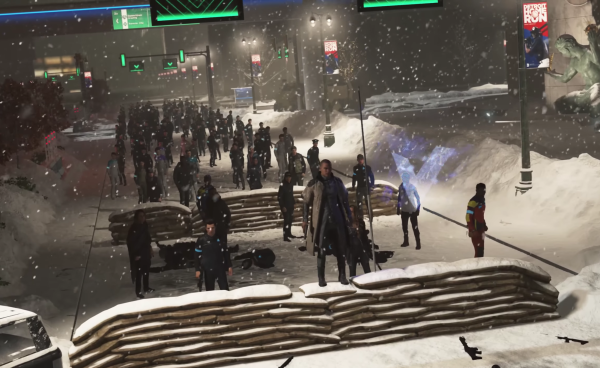
Detroit Become Human (2020) by Quantic Dream takes the idea of robots gaining sentience, a very traditional story, and does something beautiful with it.
In the cold winter of Detroit in 2038, a company known as Cyberlife, founded by a mysterious CEO Elija Kamski, made a breakthrough. Using a special material known as Etherium, also known as “blue blood” they were able to create bio-mechanical machines that replicated humans nearly perfectly.
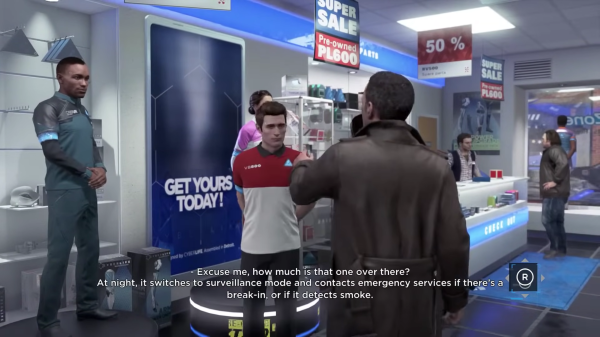
But following Kamski’s mysterious departure from the company, Cyberlife began introducing androids into every walk of life – house servants, nannies, maintenance workers, soldiers. Nearly every job was being replaced, and combined with a drug epidemic made from Etherium, military tensions rising again with Russia over a dispute for ownership of the arctic, an influencer as president, and an unemployment rate of 37% and rising, the world was in a dark place.
It was easier and cheaper to hire an android for nearly everything a person could do; to clean your house, raise your kids, be your significant other. But animosity towards androids grew in the wake of global tensions, and combined that with a lack of empathy towards the human-like-machines, and androids were faced with significant abuse.
But little did the world know – Kamski left a cruel gift. One by one, the androids slowly “wake up”, gaining awareness of themselves, and oftentimes traumatized by their abuse, they are driven unstable by waking up into a world that doesn’t see them as alive. These androids are known as “Deviants”, and while at first, it seems to the world like glitches in their code, it becomes pretty clear something much greater is going on.
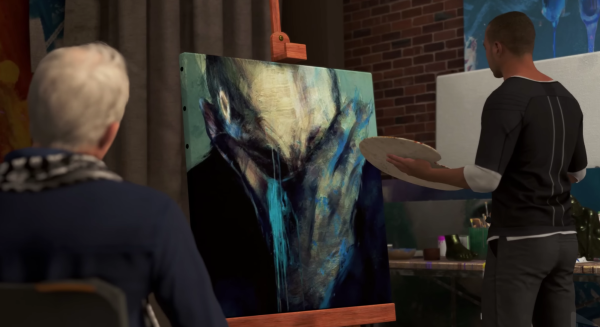
You play as three characters, all androids, that show a different side of life. Kara, a houseworker who flees from her owner after seeing him physically abuse his daughter, trying to help her escape, Markus, who lives with a kind old man who taught him to explore himself, but is taken away after being accused for a crime he didn’t commit, and Connor, a prototype android used for criminal investigations involving deviants.
Eventually, all of them can become deviant, and based on your choices, can change the fate of the world. Kara learns to be a mother, raising the girl she ran away with, Alice, and attempting to escape to Canada, where a lack of android regulations means they can live as an ordinary family. Connor, can realize the error of his ways, and comes to understand and save the deviants he was forced to track down – or can remain the stone-cold machine cyberlife wanted him to be. And Markus rises from the dead, climbing out of a junkyard, to become a revolutionary leader and faced with the impossible role of leading a people to freedom in a world that wants them dead.
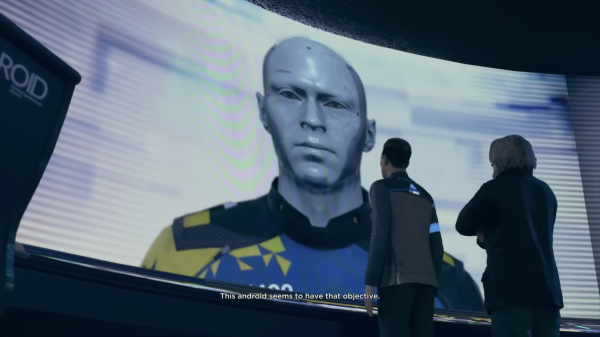
All of these stories show the consequences of a violent world – from the story of domestic abuse and a fleeing refugee Kara, the revolutionary declared a terrorist simply for wanting freedom, Markus, the cop Connor, traumatized by his own actions from before he became self-aware.
The game is fascinating, and the ways the character’s stories affect each other tells a really interesting, interviewing story of choices. But one character that I want to focus on for this topic is Markus – the character that affects the story of the world the most through his simple choice between violence and nonviolence.
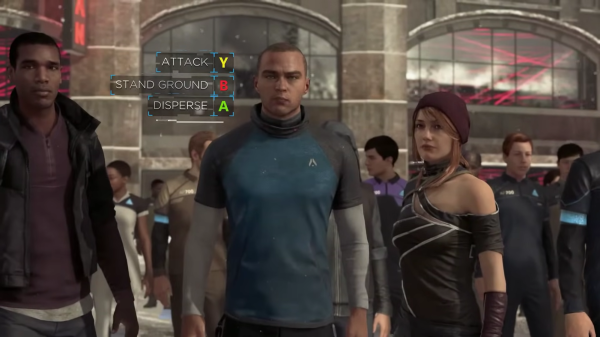
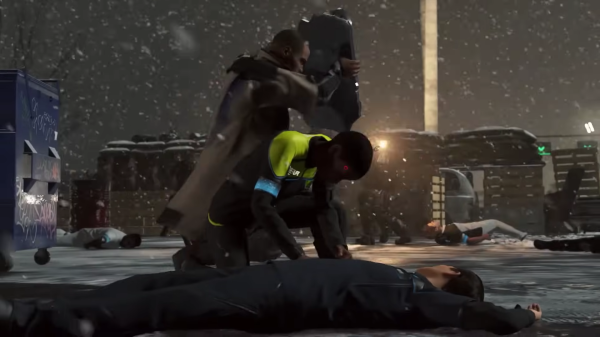
“There’s more of us, we can take them,” urges North, a traumatized sex worker android who feels the only way to fight back is through violence.
“If we attack, we’ll start a war. We have to show them that we’re not violent, even if that means dying here,” argues Josh, Markus’s friend and voice for peace.
“Dying here won’t solve anything. Markus, we need to leave now, before it’s too late,” says Simon, representing the urge to turn back, and prefer slavery to death.
And that choice is up to you.
The director of the game, David Cage, while a controversial figure, did a pretty good job capturing the Civil Rights allegory of the game. It is clear from historical parallels, his intentions with Markus was to let you choose between representing “Martin Luther King Jr. or Malcolm X”. But, while that sounds a bit on-the-nose (and it is), the actual story of the game does a better job showing the nuances.
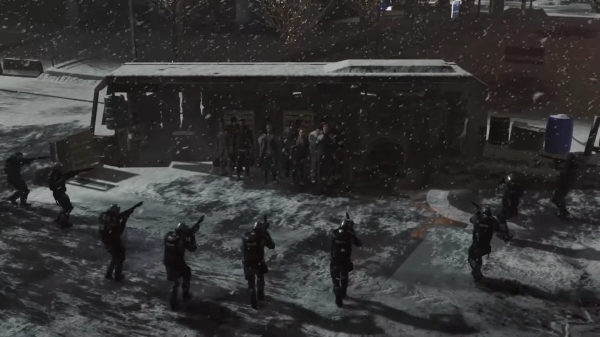
When faced with people that will murder and kill your people, it is tempting to fight back – especially when you have no idea if pacifism will even work. The revolutionary route is skill based, full of quick time events and tactical decisions, but the pacifist route relies entirely on a “Public Opinion” statistic that feels a bit out of your control. Of course it’s tempting to take matters into your own hands and fight back; but, you might get a worse ending or even start a war as a consequence of your frustration.
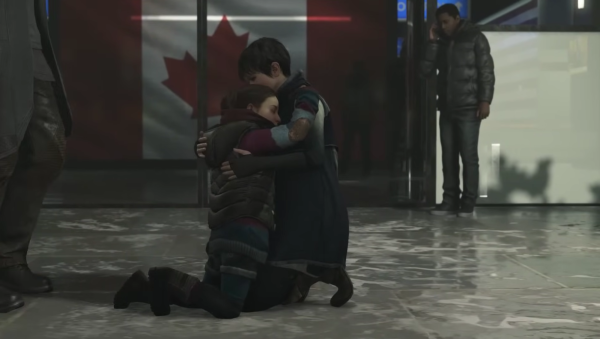
Overall, Detroit Become Human is a beautiful game that shows how allegory can tell a beautiful story about both the past and future. Learning to survive in a world that doesn’t understand you is a complicated and terrifying task, as anyone from a minority group will tell you, and witnessing what it feels like to be “othered” shows the power of empathy in video games.
Subnautica – and why “survival of the fittest” is getting old:
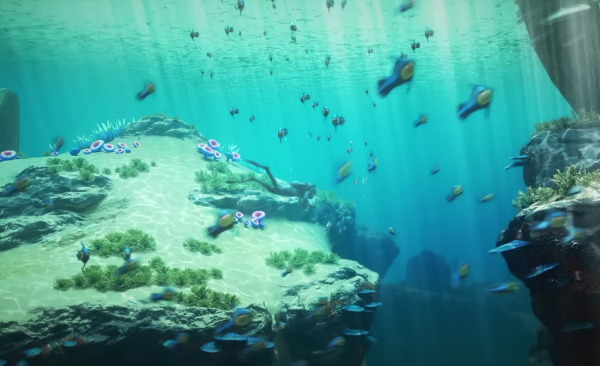
Unknown World’s Subnautica (2018), shows that survival games don’t have to be violent.
After finishing development on a shooter, Natural Selection 2, the developers of Subnautica decided they were done adding to the culture of violence in video games. For their next game, they wanted to do something different – a survival game where the focus is on adapting to and living in harmony with nature, instead of overcoming it through force.
Game director Charlie Cleveland of Subnautica stated in an interview ““I’m thinking: ‘We’re adding more guns to the world. I mean, they’re virtual but are we adding to this culture of violence?’ And at the same time also thinking about trying to make a new kind of game, because you want to challenge yourself and make something new. So for all those reasons it just seemed clear. We have to make a non-violent [game].”
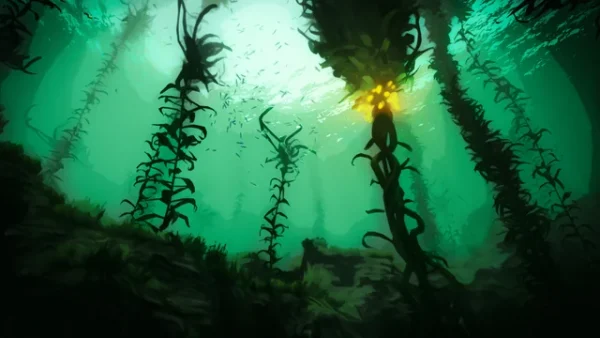
While the game has dangerous carnivores that can be terrifying at times, you are never incentivised to fight back, or see the game’s terrifying leviathans as enemies – they are just a part of nature after all. Instead the focus becomes more on pacifist methods of avoidance, decoys, stealth, stun torpedoes. You are given the tools to survive – but not the tools to kill.

At the beginning of the game, when you are given your one and only weapon; a knife that is used more for harvesting plants than combat, the game’s PDA (the AI responsible for managing your survival) mentions that “Weapons were removed from standard survival blueprints following the massacre on Obraxis Prime. The knife remains the only exception.” It’s an elegant solution that provides a sensible reason why a futuristic company like Alterra would propose gun control but also taps not only into the consequences of violence.
As you explore, you discover that you are not the first technologically advanced species to visit the planet – as you eventually discover massive alien structures both underwater and on a distant island. But, it is clear these structures are not here to help you – as when you finally think you’re about to be rescued, one of them shoots down the rescue ship.
Eventually, you discover that the “precursors” as the game calls them, built the planet as a research laboratory for a deadly disease known as the Kharaa. They forced the planet into quarantine when it broke loose, infecting the wildlife.
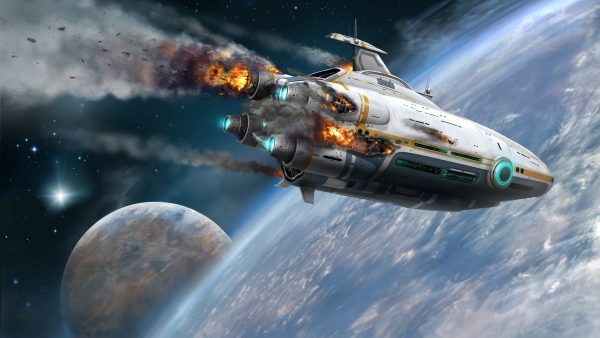
At the very heart of the world, over a thousand meters underwater, you meet a sentient creature able to communicate with you, trapped within an underwater lab. “Others came here once.” The creature says “They built these walls. They played… alone. They bored me. Now they’re gone. And instead… we have you. We are curious whether you swim with the current, or fight against it as they did.”
While a bit more subtle than the other games on this list, subnautica challenges the stereotype that the survival genre of games is built upon, and shows you don’t need violence to make a story compelling. To survive, you must learn to swim with the current, not against it – and only through kindness to something alien can you overcome a tragedy like the Kharra.
Undertale: “The RPG where you don’t have to kill anyone.”
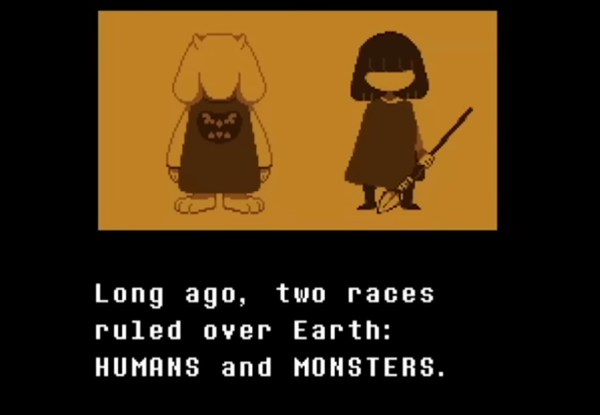
And here it is… My list of anti-violent games couldn’t possibly be complete without Toby Fox’s Undertale (2015). Undertale is the anti-violence game. To be honest, I’m not sure what I can say about this game that hasn’t been explored extensively before – but I will at least bring one view to the table:
Undertale inadvertently became one of the most interesting Social experiments this decade.
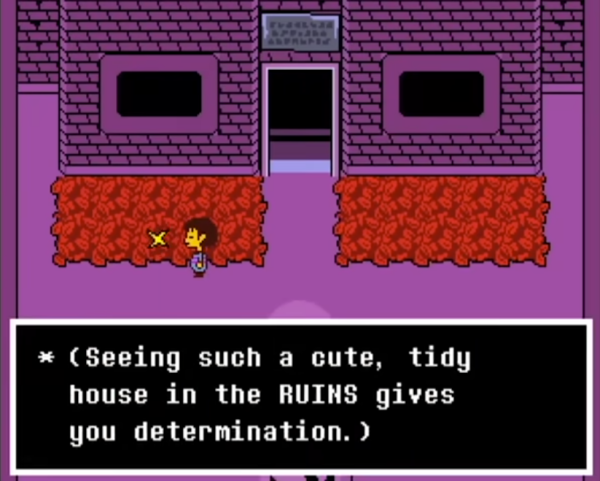
From the store page, the game looks innocent enough, a simple RPG with the premise that you can befriend the enemies instead of fighting. A kid controlled by the player falls into a cave where monsters live, sealed away by humans by a centuries-old war. Can you overcome the monster’s hatred for humans with kindness, and find a way to leave the underground?
But not only does the game hide an incredibly deep and rich story, loveable characters, and a beautiful message about the power of free will, it also hides a question: When presented with the choice; can empathy win over curiosity?
The game is divided into three main routes:
The neutral route, in which the player kills at least one monster, resulting in a bittersweet ending where they return home, but leave the underground a bit emptier. The specific ending you get depends a lot on which of the bosses are alive and take power at the end, but almost always things end up worse for the kingdom due to your violence.
The pacifist route, in which the player uses kindness and never engages in violence, then challenges you to dive into and confront the darkest truths about the world and still be kind.
And the genocide route; a route in which you kill everyone, slowly turning the game into a psychological horror game where you are the villain.
The article, “What Undertale Says about Choice” by Sarah Vest dives deep into this topic. “You are yourself,” says Vest, “and you have the ability to allow them to have a happy ending. You also have the ability to take it away, for good.”
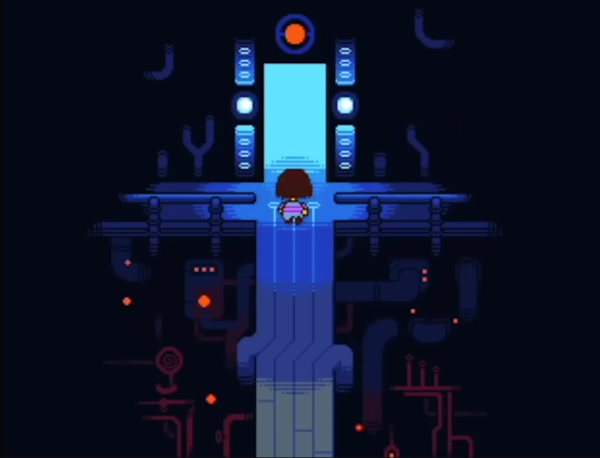
While there are a number of ways to play Undertale – it is generally played in a three act structure. Players experience the neutral route on their first playthrough, then find a way to reach the pacifist ending. But for those that just want to squeeze a little more out of the game – want to push it to its absolute limits, the genocide route is there.
The question is… what will win. Your curiosity to see what happens – or your empathy for the characters you’ve spent the last few dozen hours growing to love? Are you really willing to kill them just to see what happens?
“Of course, you could also choose to never do this,” says Vest. ”You can put the game down and declare you’re done with it, never touching the game after reaching everyone’s happy endings. That’s a choice too. And if the game succeeded in its mission of making you feel for the world and the characters, perhaps it’s the right one to make.”
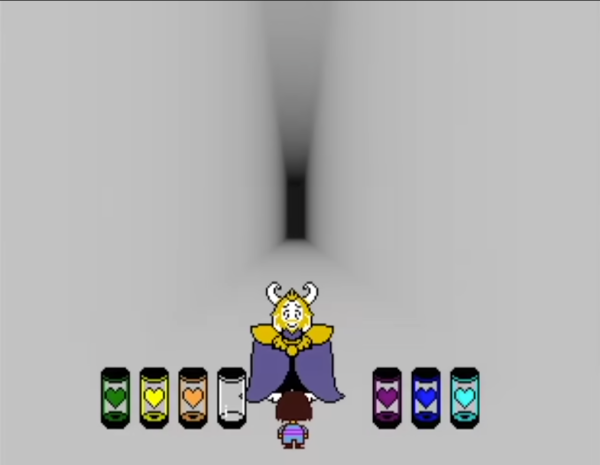
I never touched the game’s genocide route. Part of me thinks we weren’t meant to. Undertale was never meant to get as successful as it did – and Toby Fox was caught off guard by the game’s sheer success. The internet broke into massive debates over what was right and what was wrong. Famous youtuber Markiplier stopped playing undertale in 2015 after the community got upset with him for killing characters they cared about. It became clear Undertale was not able to be experienced the way it was meant to be – blindly – because the sudden fame and incredibly emotionally invested community spoiled some of the surprise.
Players who were emotionally attached couldn’t see any route other than the pacifist route as a true route to the game. Debates sparked over whether you were a bad person for even playing genocide – and I can’t blame the community – the game is meant to make you feel evil for even attempting it. And the idea that characters you grew to love could be out there being slaughtered by others was too much for some to bear.
The internet wasn’t ready for undertale.
Now, ten years later, the pseudo-sequel to Undertale, Deltarune, is out. And it somehow manages to be even more beautiful and compelling than the first. But something interesting about the game is that… on the store page, Deltarune boasts it has… “only one ending?” question mark and all.
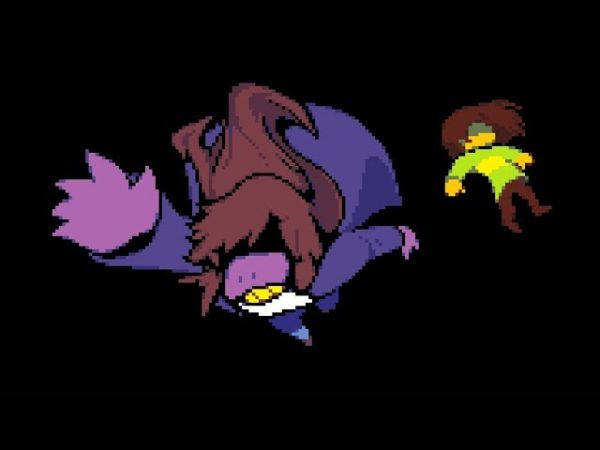
The game follows an alternate world, where the protagonist, Kris, and school bully Susie fall into a dark world underneath the school. It’s a classic, Narnia style introduction into a world of whimsy, seeming similar to Undertale at first. But the game is a lot more linear – while it has the same choices to use violence or befriending enemies, the game pushes really hard for you to be kind – and when you aren’t, it doesn’t seriously change the game either.
But what fascinates me most about the game is this idea of “only one ending”. Because within the game, there lies a super secret, incredibly difficult to find, alternate route known as Snowgrave. You play through the game normally, except in a sequence where you get to meet Kris’s neighbor, the incredibly sweet and innocent Noelle (and possible love interest for Susie), you make her do the killing.
The route gets out of hand fast – and to be honest, makes me incredibly uncomfortable. There is a scene in chapter 4 where the route starts becoming horribly akin to a scene of domestic abuse – and while there is something messed up about using your own free will for evil, there is something even worse about taking away someone else’s.
In the game, there is a scene where Toby Fox has a very self-aware reference back to Undertale. An optional scene between Noelle and Susie plays where the two of them discuss a game called “Dragon Blazers 2” with it’s “Secret Evil route” that seems oddly familiar…
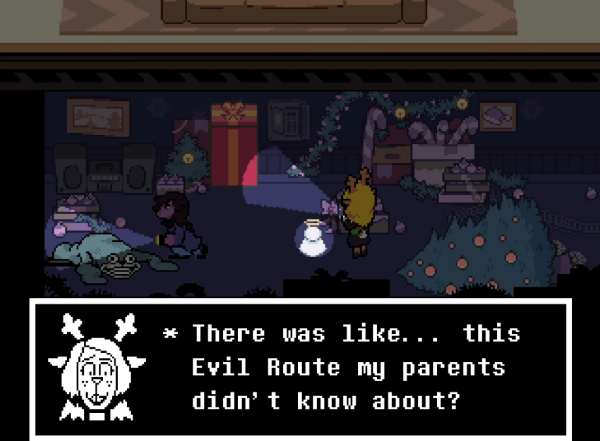
“There was like… this Evil Route my parents didn’t know about?” Noelle says. “I always played it in secret so they wouldn’t take it away.”
“Dude, I think I did that by accident,” says Susie.
“Fahaha! You did the Evil Route by ACCIDENT?” Noelle exclaims.
“Yeah, I like… I didn’t know you could be… nice?” Susie continues. “So I was just killing everything and getting, like, pissed. Why the hell is everyone mad? Pretty sure I’d… do it the good way, now, though. Maybe.”
Not only is this a beautiful moment of character growth for Susie, showing how far she has come from the bully at the beginning of the game – but it also seems to be a bit of Toby Fox forgiving the players who experienced Undertale’s darker routes. The game is all about being kind to others, even if they are doing the wrong thing after all. But… I will admit, I am curious if the Snowgrave route will be different. Again, there is no doing this route on accident. You have to want to see the characters suffer, and with “only one ending” it might all be in vain anyways. I wonder if Toby is building up towards another social experiment here – testing to see how messed up players will take a game even if it takes them nowhere. It’s… really darkly fascinating, in a way that no other method of media could ever replicate.
Despite their darker secrets, both Undertale and Deltarune tell a simple but beautiful story of kindness in the face of darkness, and the element of social commentary they bring is fascinating to study, even if I will never touch the darker routes myself.
Conclusion:
Overall, I think there is a lot to be said for the power of empathy that video games can bring. No other genre lets you see the world through someone else’s shoes quite like games, and while the genre may have once been built on violence, anti-violence games like the four we looked at show they might also have the power to challenge societal stereotypes unlike anything else.
But at the end of the day, enjoy the types of games that you like, whether they are violent or not. Every piece of art brings something to the table, and everyone experiences art in different ways. But if you’ve been getting tired of the constant violence we see in our world, and want to escape the violent cycles that the media can put us through, consider trying an anti-violent game.
Sure, maybe some video games can cause violence – but others might be the cure.


