

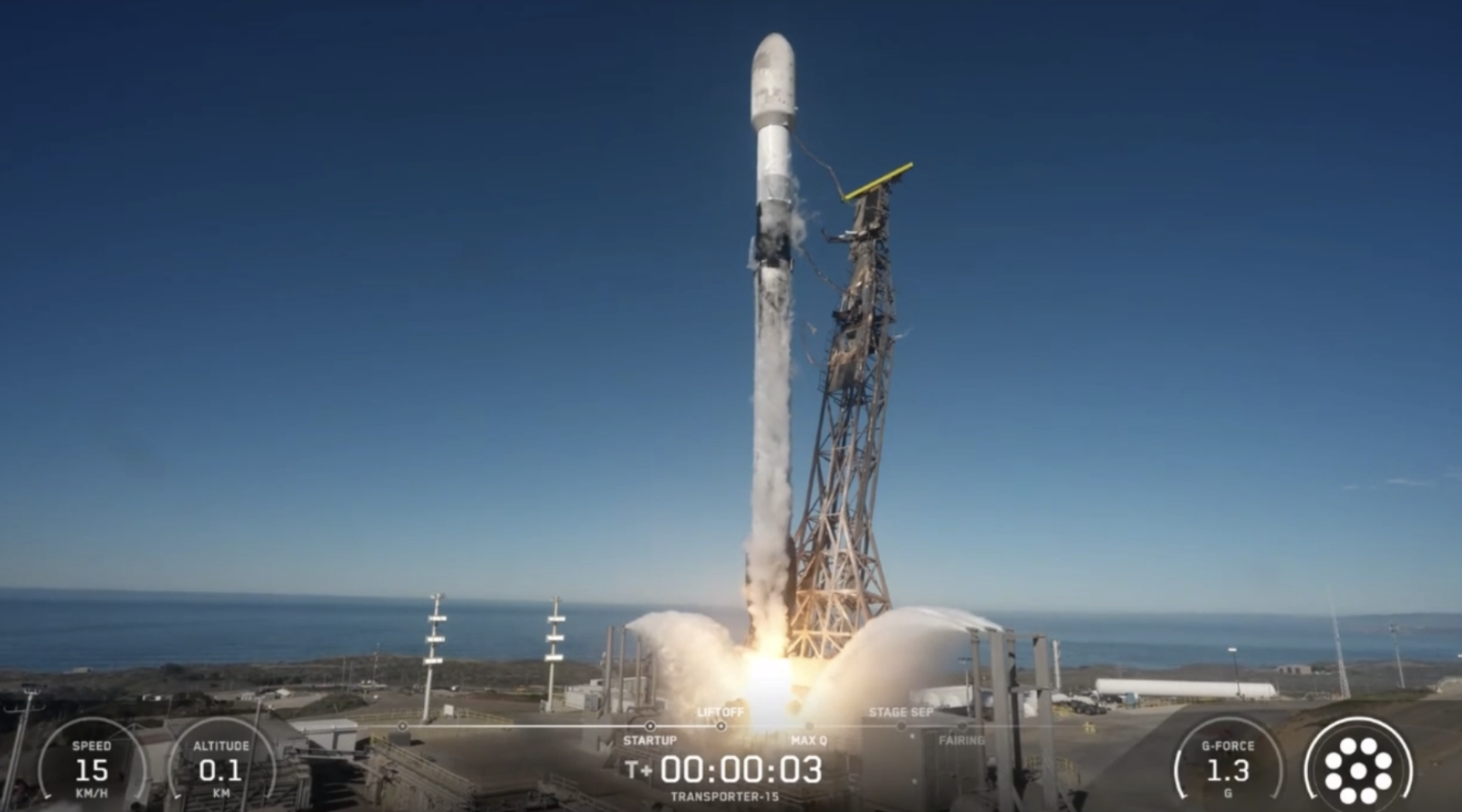
Sonoma State University’s role in a multi-campus CubeSat mission continues thanks to the work of one remaining student who has kept the university’s ground station operational as the satellite prepares for launch later this week.
The project, a collaboration between Sonoma State, Howard University, and the University of New Hampshire, centers on a 3U CubeSat designed to study the auroral cusp — the region associated with the Northern Lights, where satellites have recently experienced unusually high atmospheric drag.
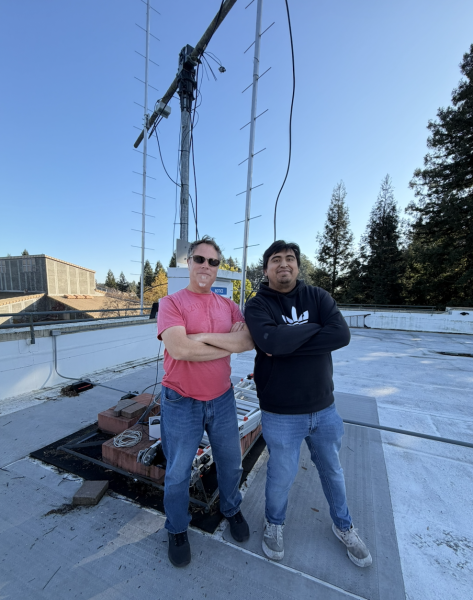
“We’re in a period of high solar activity, and satellites flying through that region are getting more drag than expected,” said Jonathan Perez, a Sonoma State electrical engineering graduate who has continued working on the mission after finishing his degree in 2024. “Some satellites have been coming down earlier than predicted, so we’re trying to quantify that and understand what’s causing the variations.”
CubeSats, which follow standardized sizes, are commonly built in 1U units measuring 10 by 10 by 10 centimeters. The current mission uses a 3U configuration, allowing room for additional scientific instruments and systems. While the science payload and onboard computer were developed primarily at the partner universities, Sonoma State’s responsibility has been constructing and maintaining the campus ground station that will communicate with the satellite once in orbit.
Perez initially joined the project to work on the satellite’s onboard computer, known as the flatsat. But as other teams took over that part of the mission, he shifted to leading the effort to rebuild the ground station to operate on amateur radio ultra-high frequencies. The team discovered that the previous CubeSat infrastructure at the university had used different frequencies and could not be repurposed.
“Our CubeSat uses amateur ham radio frequencies in the 430 to 440 megahertz range,” Perez said. “Because the old system wasn’t designed for that, we had to start from scratch.”
At the project’s peak, five Sonoma State students were involved. Over time, all but Perez graduated or moved into full-time jobs, leaving him as the last active member of the original team. “At one point, there were five of us,” Perez said. “Now it’s literally just one person.”
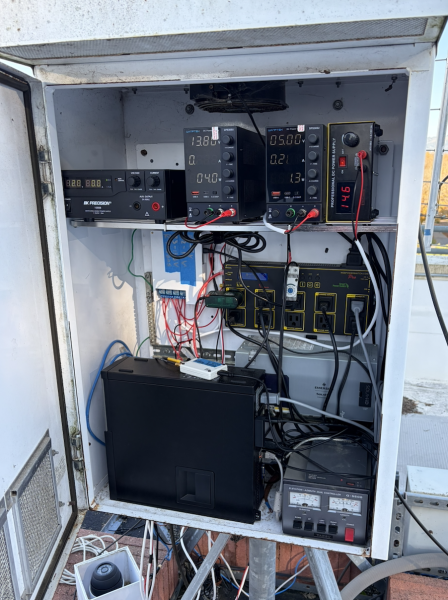
Despite the shrinking team, Sonoma State’s contribution remains essential. Once the satellite is in orbit, the university’s ground station will help receive data about atmospheric drag within the auroral cusp. The measurements will help scientists understand how space weather affects satellite lifetimes — a growing concern for both research and commercial spacecraft.
The launch has faced multiple delays, first due to the federal government shutdown and later due to bad weather. The mission was originally expected to lift off last week, then again the day before the interview, but both attempts were postponed.
“It should have been launched a while ago, but it kept getting delayed,” Perez said. “That’s science. It never goes exactly as planned.”
In an update posted by Sonoma State on November 28th, the university confirmed that 3UCubed successfully launched aboard SpaceX’s Transporter-15 mission and deployed just over an hour after liftoff. The satellite will contribute data to NASA’s IMAP mission, helping scientists better understand how solar wind interacts with Earth’s upper atmosphere. SSU’s ground station – rebuilt by students in 2022 – received its first beacon signal minutes after deployment, marking a milestone in the five-year collaboration between Sonoma State, Howard University, and the University of New Hampshire


