

As the fall semester kicked off at Sonoma State University, students returned to campus with a mix of excitement and uncertainty. Welcome Week brought back popular events aimed at energizing students, and the campus-favorite Lobo’s Pub reopened, though notably without its well-known fries.
Behind the festivities, however, the university continues to face financial challenges. Portions of on-campus housing remain closed due to low student enrollment and on-going budget constraints.
“I write to you today with sobering news about further steps that must be taken to address Sonoma State’s anticipated budget deficit,” said Interim President Emily Cutrer in a campus-wide email in January. The message was clear: SSU’s finances were in trouble.
Students and faculty quickly felt the effects. The university cut their NCAA sports programs, departments were consolidated, and dorms began to sit empty as enrollment declined.
Enrollment itself has become the hinge point for all of these changes. Interim Vice President for Strategic Enrollment Paul Edwards, confirmed in an email to the STAR that SSU is currently down roughly 400 first-time/first-year students compared to last year as of August 28.
“We won’t know final numbers until after registrations and the census data is run in mid-September,” said Edwards.
That decline not only affects which dorms remain in use but also limits what housing can count on moving forward. Even as fall numbers decline, Summer enrollment surged this year. A university report celebrated the growth.
Residential Education and Campus Housing (REACH) Director Erin Hunter explained both the short and long-term plans REACH is developing as a response to the changing enrollment trends.
These actions include repurposing underused spaces for flexible housing models that serve graduate, transfer, and non-traditional students. “Over the next five years, these initiatives will be paired with recruitment partnerships,” said Hunter.
REACH will attempt to diversify programs through family housing, faculty/staff accommodations, summer conferences and offer incentive programs such as themed living communities, flexible contracts, and rate incentives.
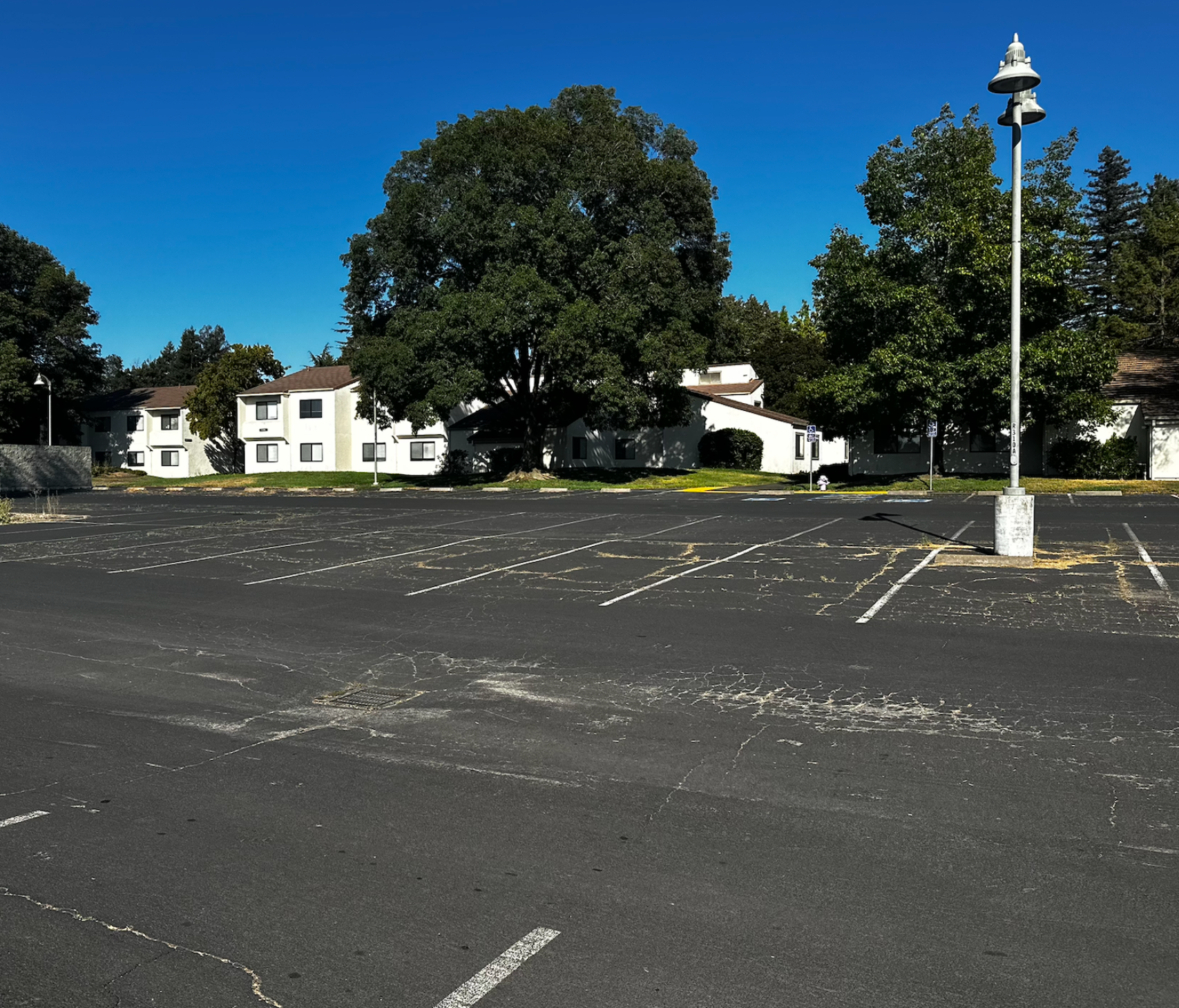
One of the most visible examples of underused housing is Zinfandel Village, which currently remains closed. Hunter noted that the decision was part of a broader consolidation strategy to focus on the most in-demand housing options in response to lower enrollment.
“While not currently part of the active housing portfolio, Zinfandel continues to serve important functions through summer conferences and local partnership use,” she said. “Looking ahead, the Village remains a valuable asset, and future enrollment trends will guide whether it may be brought back online to meet student demand.”
University planners proposed revamping Zinfandel with new buildings and additional beds, but the plan was never guaranteed.
“Since it has been the least sought-after housing option, Zinfandel was taken offline in favor of Verdot and Sauvignon, which are more popular among first-year freshmen,” said Hunter.
Financial questions are also tied to the future of housing. Hunter clarified that declining residence hall occupancy is not directly linked to the university’s overall budget deficit.
“Housing operations are fully self-supporting,” she said. “Lower occupancy does affect the housing program’s own revenue, but the department continues to pursue creative revenue opportunities while keeping student affordability and access at the forefront.”
With the recruitment staff now “back at full strength and attending additional college fairs and transfer events,” Edwards anticipates future enrollment growth. He pointed to strategies such as expanded recruiting, renewed marketing campaigns, and guaranteed admissions agreements with high schools and community colleges.
As Sonoma State continues to adapt, campus life reflects a striking contrast, between the optimism of crowded club fairs and the quiet of empty dorms. That tension defines this moment for the university, as it faces the uncertainty of what it will look like in the years ahead.


